The park buildings at Linderhof, and the one you cannot see at all
The Moorish Kiosk: not visible, and worth planning around
The Moorish Kiosk is under renovation, wrapped in scaffolding, and can be seen neither from the outside nor from the inside. I am repeating it because it is the most likely way to arrive here disappointed, and because it is the park building most people have seen a picture of.
The administration’s own words about the return are that it hopes to make the interior accessible again “zum Saisonbeginn 2028”. I am passing that on as a hope, because that is what it is, and because the same page hedges its fountains against water shortage and turns out to mean it. Do not read 2028 as a date.
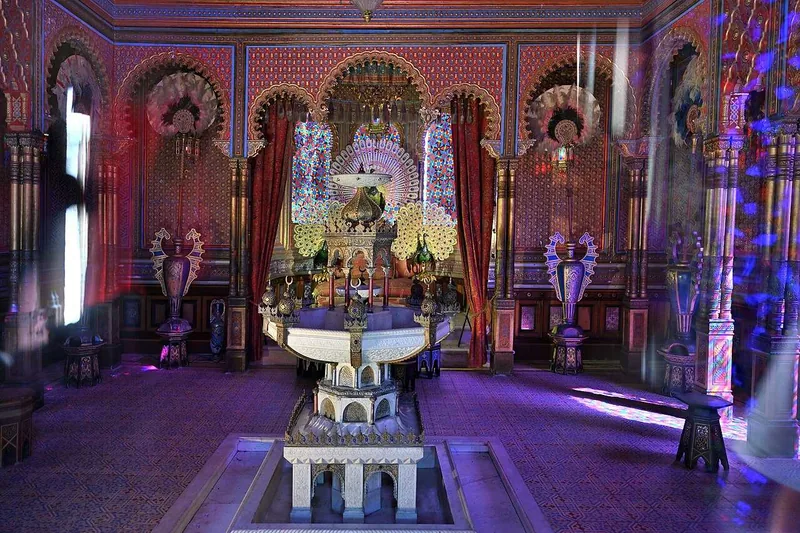
What it is, for when it comes back: it was designed by Karl von Diebitsch for the Paris International Exhibition of 1867. Ludwig tried to buy it and was beaten to it by the railway financier Bethel Henry Strousberg; he acquired it after Strousberg’s bankruptcy. So the building in this Bavarian valley came here second-hand, from a world’s fair, after somebody else’s finances collapsed.
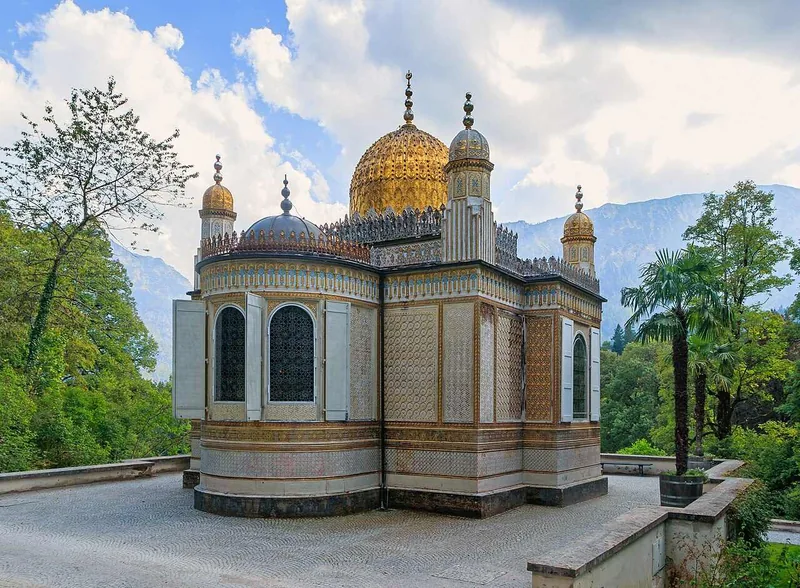
The Moroccan House, which has the same shape of story
Built in Morocco for the Vienna International Exhibition of 1873 and bought by the king in 1878. After his death it was sold to a private owner in Oberammergau — the next valley over, where I live — and it stayed there until it was bought back in 1980, restored, and put in its present place in the park, where it has stood since 1998.
Both of these buildings were bought off exhibition floors rather than designed for this park, which is the most interesting thing about the pair of them and the thing least often said. Open 9:00–18:00 in the summer half-year; shut all winter.
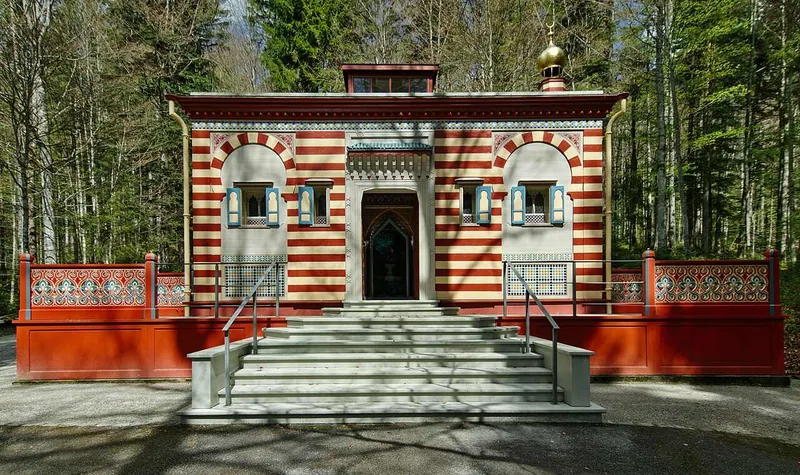
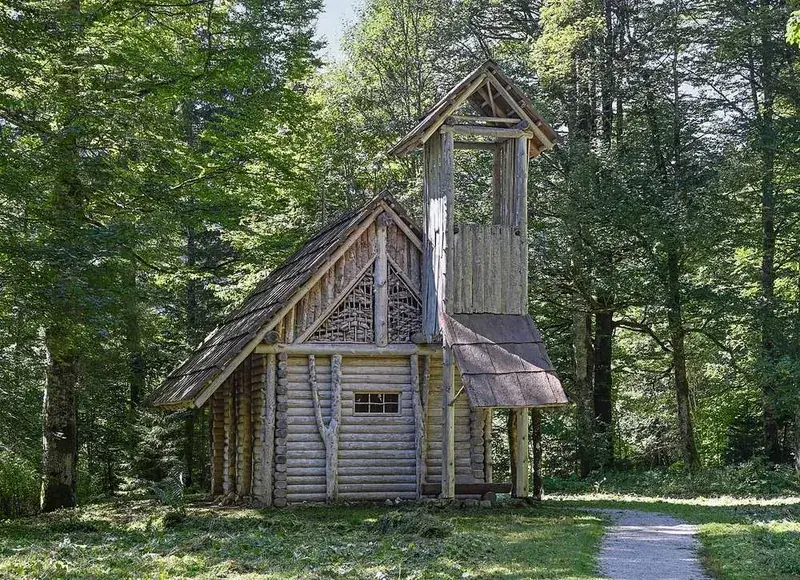
Hunding’s Hut and the Hermitage of Gurnemanz
Here is what this site can tell you honestly about these two: they open 11:00 to 18:00 in the summer half-year and they are closed all winter. That is what the administration publishes and it is what I am prepared to print.
Both names come out of Wagner, which anyone who knows the operas will spot from the names alone, and there is a good deal written elsewhere about what each building was for. None of it is sourced on this site, so none of it is stated here as though it were. Ask in the park; there is signage, and it was written by people who know.
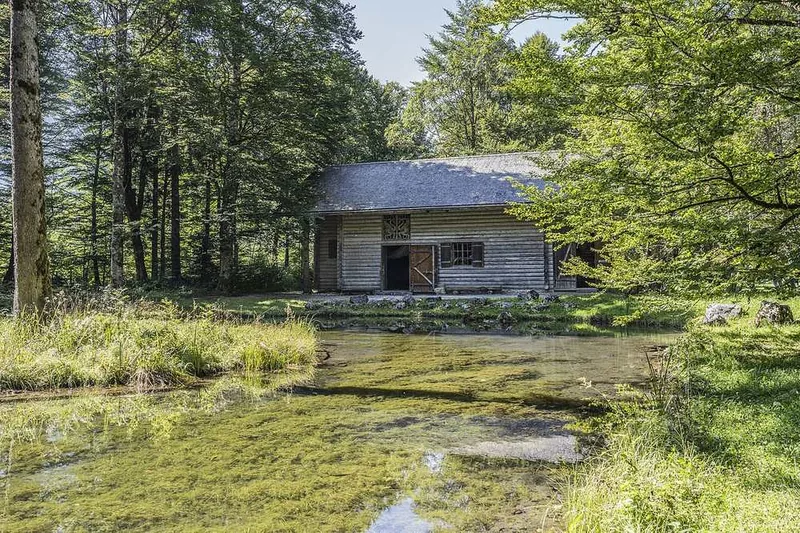
The Royal Lodge
The Royal Lodge exhibition is the only park building that opens at all in the winter half-year: Sundays and public holidays 12:00 to 16:30, and daily 12:00 to 16:30 during Bavarian school holidays. In summer it keeps the same 11:00 to 18:00 hours as the huts.
One more thing about it, because it is the third building in the administration’s photography sentence: you may not photograph inside the Royal Lodge, any more than inside the palace or the grotto. The rest of the park is yours to photograph freely. Visiting has the rule in full.
It is also the one park building with its own admission — a couple of euros, with a reduced rate. That is the single exception to the rule: the Moroccan House, Hunding’s Hut and the Hermitage of Gurnemanz need no ticket, and the Royal Lodge does. Buy it at the same desk as the palace ticket before you walk up, rather than at the door of a building that does not have one.
One thing I am not going to assert. The site held King Maximilian II’s hunting lodge, the Königshäuschen, and in 1874 that lodge was taken down and re-erected elsewhere in the park while the palace was rebuilt in stone around its position. Whether the building the Royal Lodge exhibition occupies is that re-erected lodge is a connection this site does not have in writing, so it does not make it. The Ludwig page has the building history.
What opens when
| Building | Summer, 15 Apr – 15 Oct | Winter, 16 Oct – 14 Apr | Ticket |
|---|---|---|---|
| Venus Grotto | 9:00–18:00 | Closed | €9, reduced €8 |
| Moroccan House | 9:00–18:00 | Closed | None |
| Hunding’s Hut | 11:00–18:00 | Closed | None |
| Hermitage of Gurnemanz | 11:00–18:00 | Closed | None |
| Royal Lodge exhibition | 11:00–18:00 | Sundays and public holidays 12:00–16:30; daily 12:00–16:30 in Bavarian school holidays | €2, reduced €1 |
| Moorish Kiosk | Under renovation and scaffolded — not visible, inside or out. The administration hopes to reopen the interior for the 2028 season | — | |
The eleven-o’clock opening on three of these is the trap in a morning visit. If your day trip reaches the palace at half past nine and leaves at half past eleven, you will have seen the palace, the grotto and the outside of everything else. Ask your operator what time you actually arrive before you plan around the huts.
The fountains
Not a building, but it belongs on this page because it is the other thing in the park that keeps a timetable. The fountains play April to October, every half hour between 9:00 and 18:00. The administration notes that capacity may be reduced by water shortage, which I am passing on as written: the half-hour is the schedule, not a promise.
Read next
- The Venus Grotto, properly.
- Summer or winter — the park in the cold half-year.
- What to see, in the order you meet it.
- Hours and the closed days.
Frequently asked questions
Can you see the Moorish Kiosk at Linderhof?
No. It is under renovation and wrapped in scaffolding, visible from neither outside nor inside; the administration hopes to reopen the interior for the 2028 season, which is a hope and not a date. It was designed by Karl von Diebitsch for the Paris International Exhibition of 1867 and acquired by Ludwig II after the bankruptcy of Bethel Henry Strousberg, who had outbid him for it.
What is the Moroccan House at Linderhof?
A building made in Morocco for the Vienna International Exhibition of 1873 and bought by Ludwig II in 1878. It was sold after his death to a private owner in Oberammergau, bought back in 1980, restored, and has stood in its present place in the park since 1998.
Do you need a ticket for the park buildings?
The Moroccan House, Hunding’s Hut and the Hermitage of Gurnemanz need no ticket, and neither does the park itself. Two things do: the Venus Grotto, which has its own admission and a combination ticket with the palace, and the Royal Lodge exhibition, at about two euros.